Palau’s Digital Residency: The Secret Advantage every Nomad needs.
More than a visa, this ID is becoming a secret passport for nomads, entrepreneurs, and crypto pioneers.
 By Nomad Herald . · September 13, 2025 · 3 min read · Visa & Residency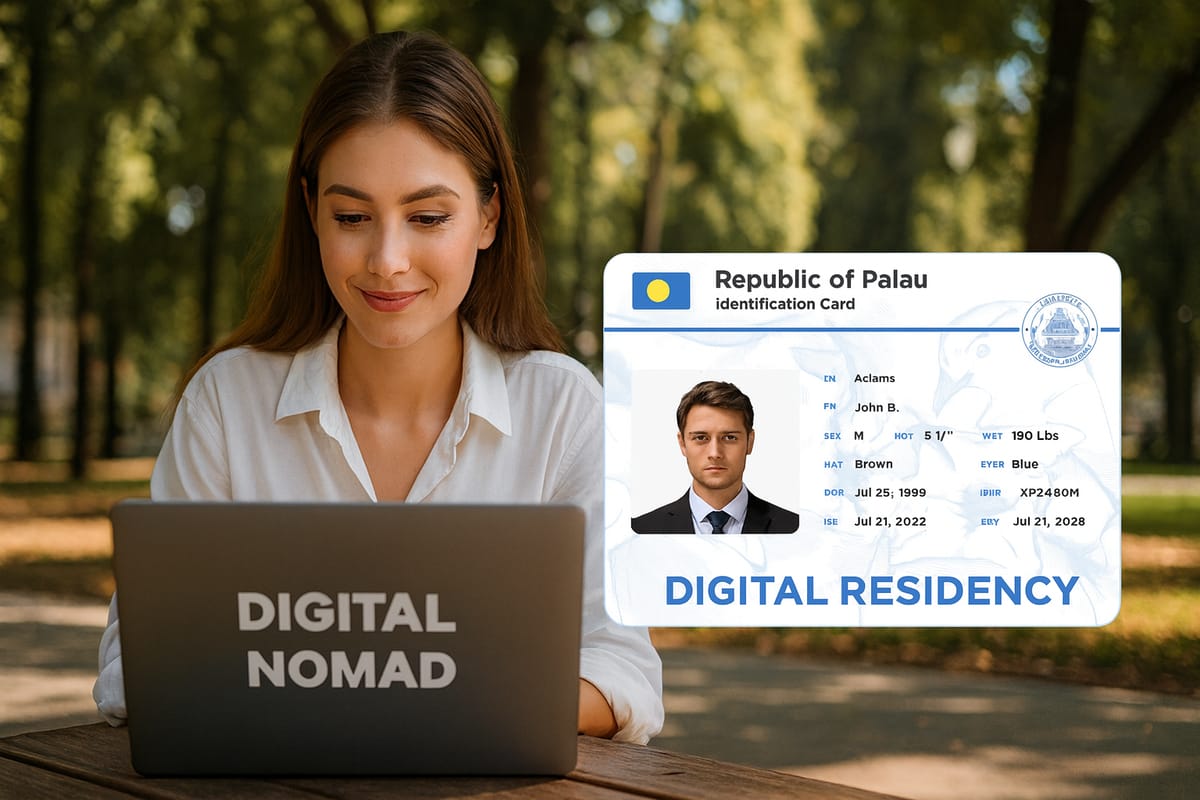
Today we spotlight something different, not just another visa, but a digital key that opens doors many nomads do not realize exist. Palau's Digital Residency is not a passport and not citizenship. For remote workers and crypto entrepreneurs, though, it has quietly become one of the most useful tools in the modern nomad kit. Here is what it really is, and what it is not.
What Palau Digital Residency actually is
Palau, a small island nation in the Pacific, issues a government backed digital residency ID. You receive a physical ID card plus a blockchain based digital identity. It is a verified identity credential, not an immigration status. To be clear about the limits: it does not grant the right to live, work, settle, or run a local business in Palau, and it is not a route to citizenship.
Why nomads and founders use it
The value is identity verification that works across borders. In 2025 the ID is accepted for know your customer checks on many crypto exchanges, and remote workers have used it to verify accounts on fintech platforms and to help with company formation. For location independent people who often struggle to prove a stable address, a recognized government issued ID can smooth out banking and platform sign ups.
What it costs
- One year: about 248 dollars.
- Five years: about 1,039 dollars.
- Ten years: about 2,039 dollars.
Each tier includes the physical card and the digital identity. Application is fully online.
The tax myth you should ignore
Some marketing suggests the ID gives you zero tax on foreign income. That is misleading. The ID by itself does not make you a tax resident of Palau. Tax residency depends on actually establishing residency in a country under its rules, and you likely keep reporting and tax obligations at home. Treat Palau Digital Residency as an identity tool, not a tax strategy, and get advice from a qualified professional before making any tax decisions.
Should you get it?
If you deal with crypto exchanges, international banking, or company setup and want a recognized backup identity, the one year tier is a low cost experiment. If you are chasing tax breaks or the right to relocate, this is not the product for you. For paths that truly let you live abroad, see our guide to the easiest digital nomad visas.
Is Palau Digital Residency a visa?
No. It is a digital identity and residency ID, not a visa or a residence permit. It does not let you enter Palau to live or work, and it does not replace the digital nomad visas offered by countries like Spain, Thailand, or Colombia. Think of it as a verified ID, not an immigration document.
Which exchanges accept the Palau ID?
As of 2025, many major exchanges accept it for identity verification, and the list keeps changing. Acceptance is never guaranteed and varies by platform and region, so check directly with your exchange or bank before you rely on it. Requirements shift often in the crypto space.
Want more under the radar tools for the borderless life? Subscribe to Nomad Herald.
You may also like
Grenada Citizenship by Investment: The Ultimate 2026 Guide
Discover how the Grenada citizenship by investment program works, including costs, timelines, and the unique US E-2 visa opportunity.
Seychelles Workcation Visa Guide: How to Apply in 2026
Learn how to secure the Seychelles workcation visa. Discover the requirements, application process, and what life is like as a remote worker.
How to Apply for the Kenya Digital Nomad Visa
Learn the requirements, application steps, and lifestyle benefits of the Kenya digital nomad visa for remote workers moving to Nairobi or the coast.
How to Apply for the Sri Lanka Digital Nomad Visa
Learn how to obtain the sri lanka digital nomad visa, understand the requirements, and discover long-stay options for remote workers.
Join the Nomad Herald newsletter
Visas, remote income, and borderless living. Free, straight to your inbox.